Lightblade 1500S
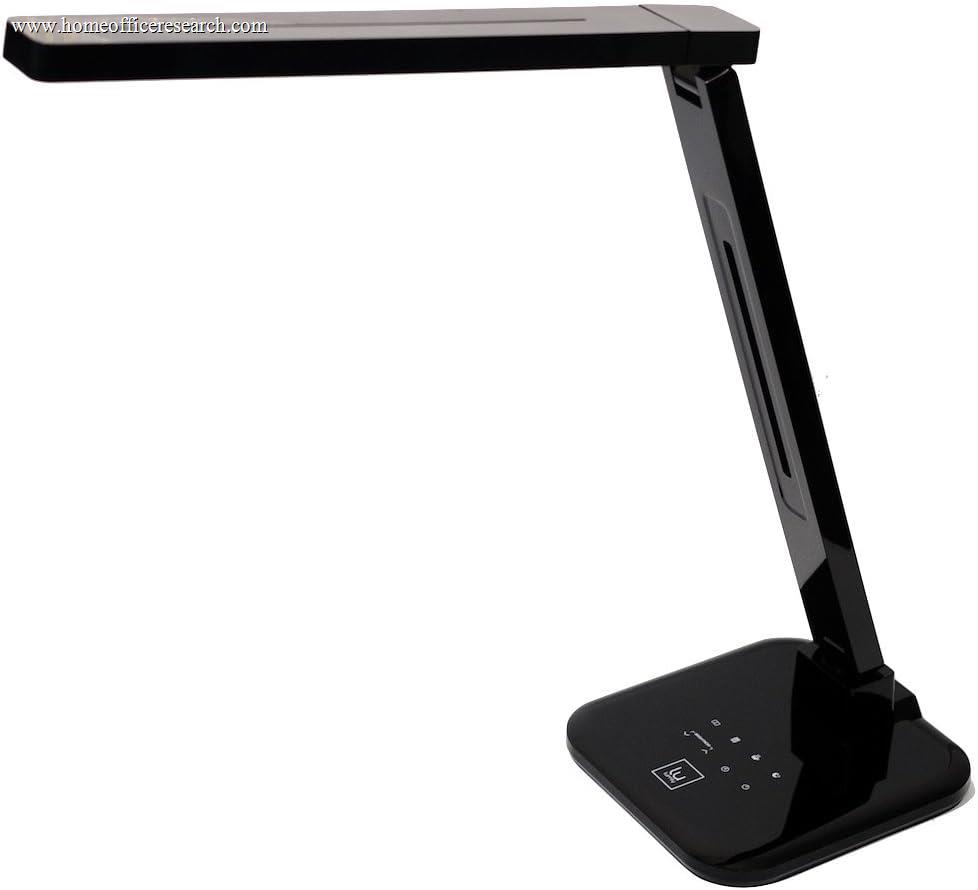
The Lumiy Lightblade 1500S posts the highest raw lux output in Tier 2 — 1,500 lux, well above the ANSI-recommended 500-lux desk standard — and backs it with manufacturer-claimed flicker-free performance and 20-level dimming. It concedes ground on color temperature range (3000K–6000K, missing the 2700K warm floor), and its value proposition at its price point is weaker than alternatives. For users who need maximum output with manufacturer-claimed flicker-free comfort, it’s a specialized pick.
How We Scored It
Category Deep-Dives
Light Quality
8.0 / 10 30% weightingThe Lightblade 1500S leads Tier 2 in raw lux output: 1,500 lux at the rated test distance. This is three times the ANSI-recommended 500-lux standard and more than sufficient for any detail-intensive desk work. CRI 90+ ensures color accuracy above the minimum recommended threshold for professional use.
The 8.0 rather than a higher score reflects the color temperature ceiling of 6000K (versus the 6500K daylight standard) and the floor of 3000K (versus 2700K on the best lamps in the category). These gaps narrow the versatility range slightly — the Lightblade can’t deliver the warmest evening-mode illumination that a full 2700K lamp provides.
Bottom line on light quality: Best-in-Tier-2 lux output by a significant margin. CRI 90+ and a practical temperature range make this a strong performer on raw light output. The truncated temperature range prevents a higher score.
Adjustability & Control
7.0 / 10 25% weighting20-level brightness dimming is a genuine advantage — fine-grained control across the full range, a meaningful improvement over the five-level dimming common on budget lamps. It is not the fully stepless control of the BenQ ScreenBar lineup, but the steps are small enough that most users will not notice the difference in practice. Color temperature is adjustable across the 3000–6000K range in four discrete steps.
The form factor is a traditional articulating base lamp with a flexible arm, allowing wide physical repositioning. The absence of a wireless or desk-level controller means brightness adjustments require reaching to the lamp. At this price point, a simple dial or remote control would have meaningfully improved day-to-day usability.
Bottom line on adjustability: 20-level dimming gives fine-grained control — not the fully stepless adjustment of the BenQ ScreenBars, but a clear step up from five-level competitors. Physical controls require reaching to the lamp — a daily friction point for users who adjust frequently.
Eye Comfort
8.5 / 10 20% weightingFlicker-free operation is the most important eye comfort specification, and Lumiy markets the Lightblade as flicker-free. We could not find independent third-party (e.g. IEEE PAR 1789) flicker testing for it, so we treat this as a manufacturer claim rather than verified certification — but flicker-free is the headline eye-comfort attribute Lumiy advertises, alongside its high output.
At 1,500 lux, the Lightblade is bright enough that some users may find it uncomfortably intense at full output in a small room. The fine-grained 20-level dimming handles this well, but glare control at high output is worth managing through careful positioning. As a traditional desk lamp, it lacks the asymmetric optics of screen bars that prevent monitor glare by design.
Bottom line on eye comfort: Manufacturer-claimed flicker-free performance at the highest lux output in Tier 2. High-brightness settings require attention to positioning to avoid glare.
Build & Design
6.5 / 10 15% weightingThe Lightblade 1500S uses a moderately sized base with a single-joint arm — functional but not particularly refined. The construction is primarily plastic with a matte finish. Arm stability is adequate; the joint holds position without noticeable sag under normal use. At this price tier, the build quality is reasonable but unremarkable.
The absence of a USB charging port is a minor omission at this price level — competing options at lower price points include one. The design is clean and inoffensive but doesn’t justify the price premium over competing options on aesthetics or materials alone.
Bottom line on build: Functional construction that doesn’t distinguish itself at its price tier. No USB port is a miss at this level.
Value
5.5 / 10 10% weightingThe Lightblade 1500S sits at a price level where the competition becomes demanding. The BenQ ScreenBar Pro — with higher overall specs, motion sensor, and a fundamentally superior form factor for monitor-centric workspaces — is available at a similar price. Competing desk lamps at lower price points deliver manufacturer-claimed flicker-free performance, albeit at lower lux.
The value case for the Lightblade rests specifically on its lux output: if you need 1,500 lux with manufacturer-claimed flicker-free performance in an articulating lamp, there is limited competition at any price. That’s a narrow but real use case — detail craftwork, architectural drafting, photography editing requiring maximum brightness. For general home office use, the value equation doesn’t hold up against alternatives.
Bottom line on value: Hard to justify at this price for general home office use. If maximum-output manufacturer-claimed flicker-free lighting in an articulating form factor is the specific requirement, it earns its price. Otherwise, look at the ScreenBar Pro for a modest amount more.
About the Manufacturer
miy
Lumiy is a smaller specialty lighting brand with a focused product line centered on high-output LED desk lamps. The Lightblade lineup was designed around a clear specification thesis: maximum lux output combined with a manufacturer flicker-free claim — a combination that required either accepting higher prices or making tradeoffs elsewhere in the feature set.
The brand sells primarily through Amazon and has maintained a consistent focus on the high-lux segment rather than competing across the full desk lamp market. For users with specific high-brightness requirements, Lumiy’s narrow focus works in their favor. For general home office buyers, the wider market offers stronger alternatives at comparable price points.